If you've ever stood in front of two identical-looking clones and had no idea which mother they came from, this one's for you. Clone lineage is just the family tree of your plants — which cutting came from which mother, when you took it, and how many generations back the whole line goes. Most home growers keep it in their heads until the day they can't, and that's usually the day it costs them a keeper.
Here's how to track it properly without turning your grow into a spreadsheet job.
What "clone lineage" actually means
A clone is a genetic copy of the plant you cut it from. Take a cutting from a plant, root it, and you've got a new plant with the exact same genetics as the mother. Take a cutting from that plant later, and you've got a second-generation clone — same genetics, one step further down the line.
Lineage is the record of those steps. A clean lineage record answers three questions at any time:
- Who is the mother? The specific plant this cutting came from — not just the strain name, but that individual plant.
- When was the cut taken? The date you took the cutting and, ideally, when it rooted.
- What generation is this? How many clone-of-a-clone steps removed you are from the original seed plant.
That last one matters more than people expect, which we'll get to.
Why lineage tracking is worth the small effort
You can keep your keeper
Say you popped a pack of seeds, grew them out, and one plant was clearly the standout — great structure, resin, smell, whatever won you over. That's your keeper pheno. The only way to grow it again is to have taken clones from it and known they came from that specific plant. If your labels just say "Blueberry Muffin" and you had four Blueberry Muffin seedlings, you've got a one-in-four guess. Lineage tracking turns that guess into a certainty.
You can trace problems back to a source
Pests and disease often ride in on cuttings. If two of your plants show the same issue and your records show they're the only two that trace back to Mother #3, you've found your likely source — and you know which other cuttings from that mother to watch or cull. Without lineage, you're inspecting the whole room blind.
You can spot genetic drift and mother fatigue
Clones don't mutate the way seeds vary, but mother plants do age. A mother that's been cut from repeatedly over many months can get tired — slower rooting, weaker vigor in the cuttings. If you track generations and cut dates, you'll notice when a line's rooting success starts dropping and know it's time to start a fresh mother from an earlier, healthier clone rather than pushing a worn-out one.
You can actually breed on purpose
If you ever cross plants or hunt phenos across a few rounds, lineage is the whole game. Knowing exactly which mother and which line produced a result is the difference between reproducible work and happy accidents you can't repeat.
A simple system you can start today
You do not need software to begin. You need a consistent naming convention and a place to write things down. Here's a system that scales from four plants to forty.
1. Give every mother a permanent ID
Strain name alone isn't enough — you might have several plants of the same strain. Give each individual plant a short unique ID and never reuse it. A simple format:
[Strain abbreviation]-[number]-[year]So your third Blueberry Muffin from 2026 becomes BBM-3-26. That ID belongs to that plant for life. Every cutting you take from it references it.
2. Use generation notation
Tack a generation marker onto clones so you always know how far down the line you are. Keep it plain:
- S = the original seed-grown plant (
BBM-3-26-S) - C1, C2, C3… = first, second, third clone generation off that plant
So BBM-3-26-C2 is a second-generation clone — a cutting taken from a cutting of the original seed plant. When you read that label a year later, you know exactly what you're holding.
Note: seed breeders use "F1/F2" to mean filial generations from a cross. Using C for clone generations keeps the two separate, so you never confuse a clone gen with a breeding gen. The rule that matters is: be consistent and write down what your notation means.
3. Log four fields per cutting
Every time you take cuttings, record:
- New clone ID (mother ID + generation, e.g.
BBM-3-26-C1) - Mother ID it came from
- Cut date
- Rooted date (fill in when it roots — this quietly builds your rooting-success data)
That's it. Four fields. A spiral notebook works. So does a spreadsheet with those four columns.
4. Label the physical plant to match
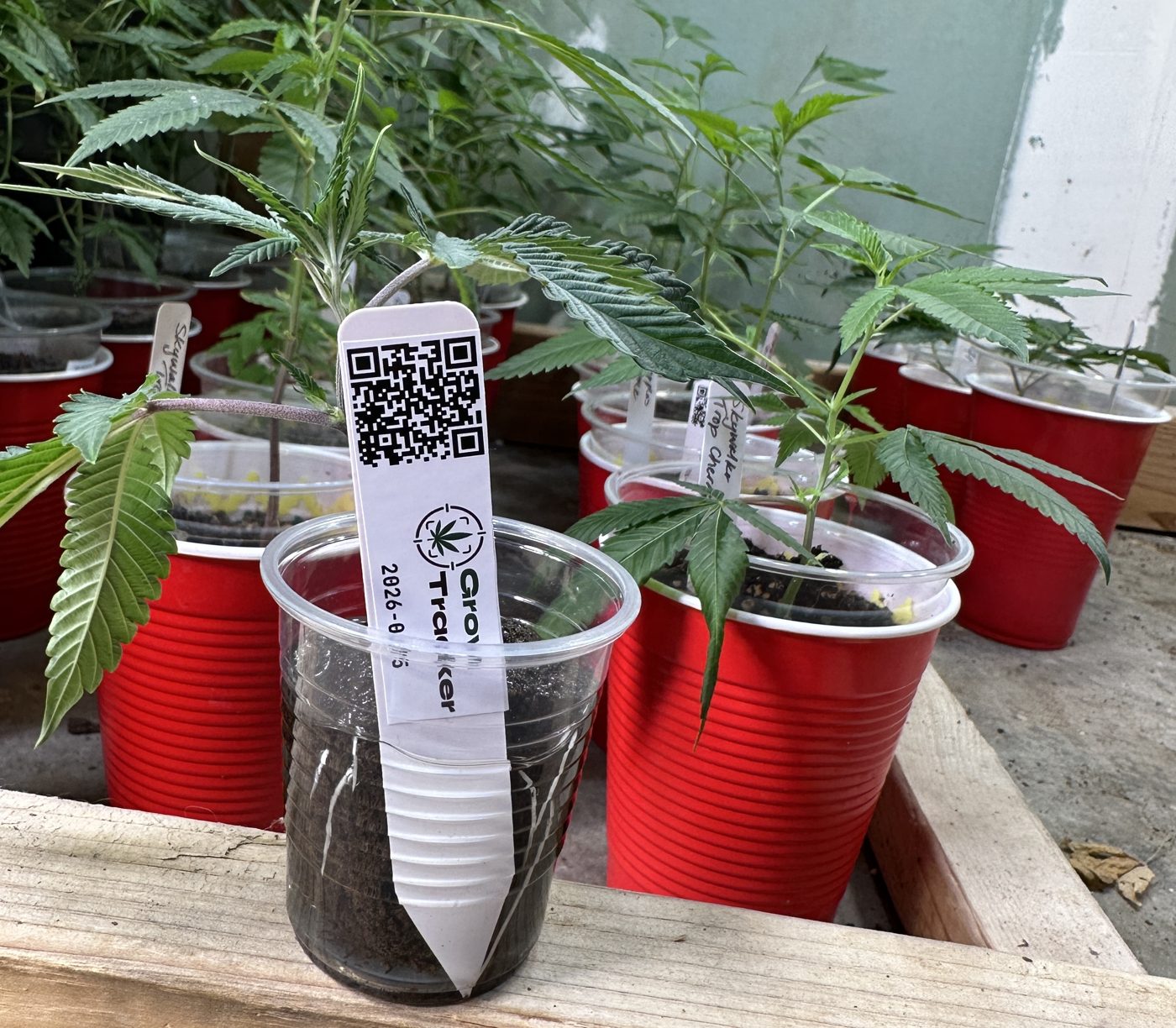
A record is only useful if it connects to the actual plant in front of you. Write the clone ID on a stake tag, a piece of tape on the pot, or a printed label. The failure mode everyone hits is a perfect notebook and a room full of unlabeled pots. Match the tag to the record and your system survives contact with a busy grow day.
The mistakes that break a lineage system
Reusing IDs. If you ever let BBM-1 mean two different plants across two rounds, every record that references it becomes ambiguous. Add the year, never recycle a number.
Strain name as the only label. "Wedding Cake" is not an ID when you have three of them. It tells you the genetics family, not the individual — and individuals are the whole point of lineage.
Tracking the record but not the plant. A beautiful log and unlabeled pots is the single most common failure. The tag on the pot and the line in the log have to carry the same ID.
Trusting your memory during transplant chaos. The day you're up-potting fifteen plants at once is exactly when two tags get swapped. Label before you move plants, not after.
When your grow outgrows the notebook
A notebook is fine for a few plants and one or two mothers. It starts to strain once you've got multiple mothers, several generations in play, and cuttings moving between stages. At that point the thing that breaks is usually the link between the record and the physical plant — you can write "C2 off BBM-3-26" in a notebook, but you can't scan a notebook.
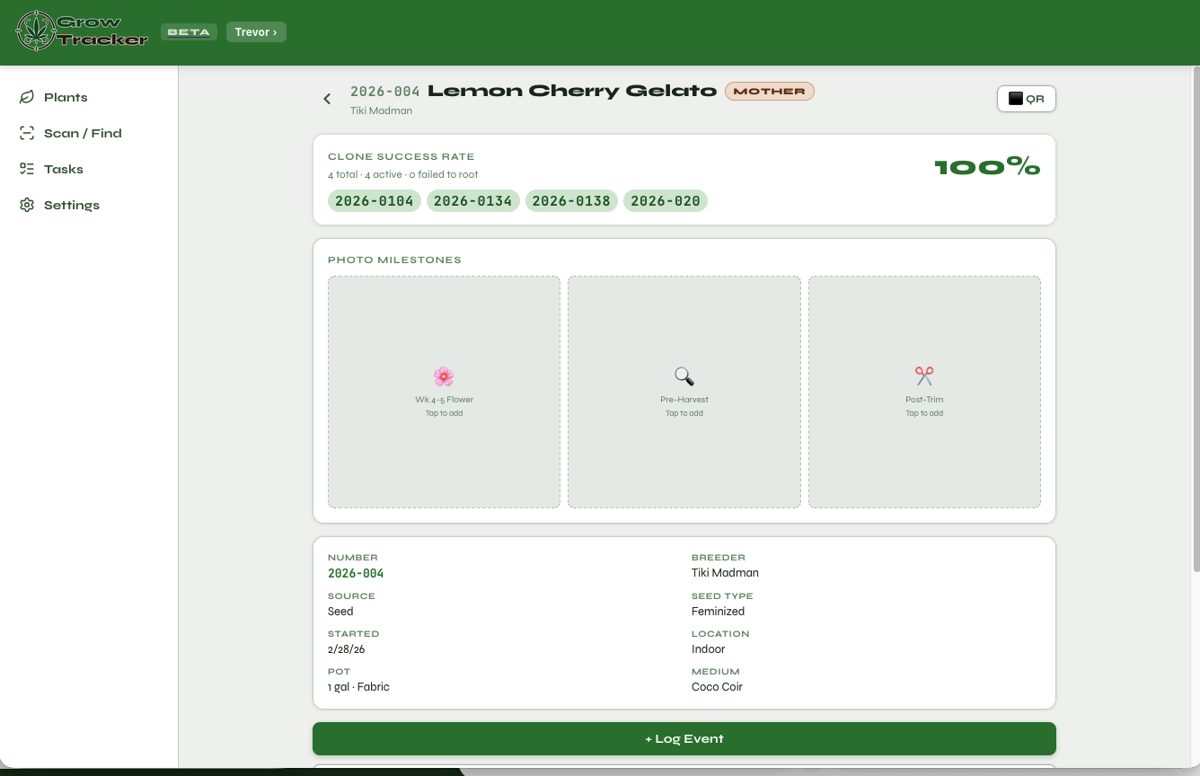
That's the workflow gap GrowTracker was built to close: every plant gets a printable QR label, so you scan the tag on the pot and the full lineage — mother, cut date, generation — is right there.
However you track it, the principle is the same: give every plant a permanent ID, note where each cutting came from, and keep the tag on the pot matching the line in your log. Do that and you'll never lose a keeper to a guess again.